Binary Options for Beginners and Where to Start
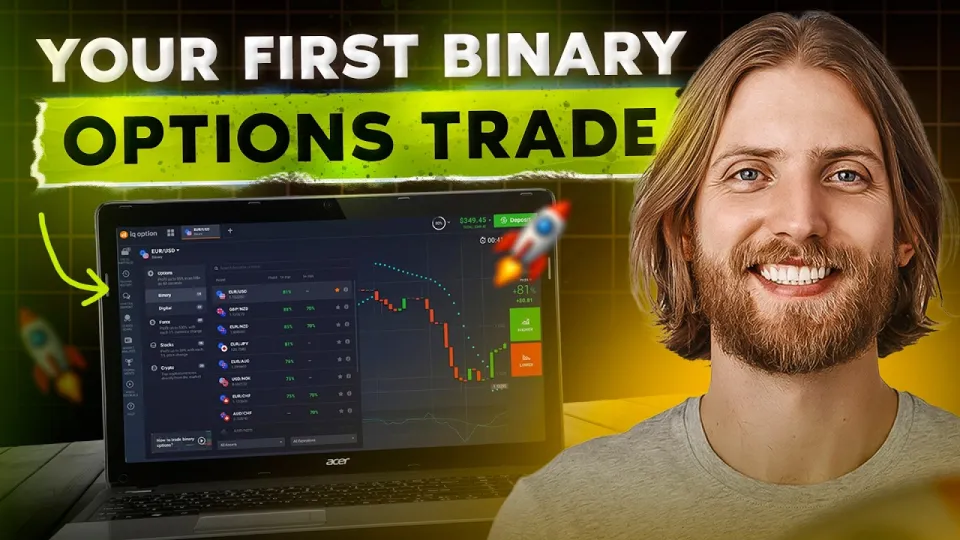
Video: Binary Options | Binary Options Tutorial for Beginners | Where Should You Start?
Binary options are fixed-risk trading contracts in which you stake a set amount on whether an asset's price will be above or below a chosen level when the contract expires; if you are right you receive a fixed payout, typically 60–90% of the stake, and if you are wrong you lose the stake itself. For a beginner the practical starting point is a demo account on a regulated broker, a written rule set with one or two assets, and a stake size of 1–2% of the balance — for example, registration at Quotex via this link gives access to both a demo and a live account so you can test the mechanics without money at risk.
How binary options actually work
A binary option has only two outcomes, which is where the name comes from. You pick an asset such as EUR/USD, gold or Bitcoin, choose an expiry time, and decide whether the price will finish higher (Call) or lower (Put) than the strike price shown at the moment of purchase. The platform locks the payout percentage when you open the trade, so both the maximum win and the maximum loss are known before the contract starts.
The break-even math is the part most beginners skip. At a 80% payout you need a win rate above roughly 55.6% to stay flat, because 0.8 × 55.6% equals 0.444 × 100%, which balances the losing side. At a 70% payout the required accuracy rises to about 58.8%. That means a strategy that wins half its trades is a losing strategy regardless of how good the chart looks.
Choosing an expiry time and an asset
Expiry length changes the character of the trade more than any other setting. Very short expiries of 30–60 seconds are dominated by spread and noise, while 15-minute to 4-hour expiries give technical levels such as support, resistance and moving averages time to play out. Longer expiries usually also carry higher payout percentages, which lowers the accuracy you need to break even.
Asset choice follows the same logic. Major currency pairs like EUR/USD and GBP/USD have tight spreads and predictable session behaviour, with the London and New York overlaps producing the cleanest movement. Exotic pairs and crypto offer larger payouts but wider swings, so they punish imprecise entries. A workable beginner setup is one major pair, one expiry range, and one session.
A step-by-step start for a new trader
- Open a demo account on the platform you intend to use and fund it with virtual capital equal to what you would realistically deposit.
- Pick a single asset and a single expiry, for example EUR/USD with 15-minute contracts.
- Define an entry rule in writing, such as a price reaction at a level confirmed by a moving average or an RSI reading.
- Cap each trade at 1–2% of the balance and stop for the day after three consecutive losses.
- Log every trade with the reason for entry, the outcome and a screenshot, then review the log weekly.
- Move to live money only after 100 or more demo trades show a win rate above the break-even threshold for your payout.
Platforms and tools worth comparing
The tutorial's materials point to three brokers — Quotex, Pocket Option and Binarium — and all three offer the same core package: demo accounts, expiries from seconds to hours, and payouts in the 60–90% range depending on asset and duration. Differences appear in the asset list, the minimum deposit, the payout on specific pairs and the quality of the charting tools, so comparing them side by side on a demo account is more useful than reading marketing pages.
A VPN such as Nord VPN is also referenced in the materials, mainly because some brokers restrict access by region and traders use a stable connection to avoid session drops during an open contract. Whatever platform you choose, verify the licence, the withdrawal terms and the processing time before depositing.
Common beginner questions and mistakes
New traders most often ask whether a signal group or a paid indicator can replace practice. It cannot: a signal tells you nothing about position sizing or what to do after two losses, and those two decisions determine the result more than the entry itself. The second recurring doubt is about the minimum deposit needed to start; the honest answer is that the deposit matters less than the stake size, since a $10 account traded at $1 per position is risking 10% per trade and will be wiped out by a normal losing streak.
Other frequent mistakes include switching strategies after every loss, trading during low-liquidity hours when spreads widen, and increasing stake size to recover a drawdown. Martingale-style doubling after a loss is especially dangerous with binary options because the payout is below 100%, so each recovery step requires a larger and larger stake to return to break-even.
All links from the video
- Quotex registration: https://dakaklik.com/_quotex?creative_id=WzzpYsjS3ps
- Pocket Option: https://dakaklik.com/_PocketOption?creative_id=WzzpYsjS3ps
- Binarium: https://dakaklik.com/_Binarium?creative_id=WzzpYsjS3ps
- Nord VPN: https://dakatop.link/Nord_us?creative_id=WzzpYsjS3ps
Summary
Binary options reward accuracy and discipline rather than prediction, and the break-even math — roughly 56% wins at an 80% payout — is the number every beginner should memorise before placing a trade. Start on a demo account, fix one asset and one expiry, risk 1–2% per position, and keep a trade log until the numbers prove the edge is real. The video breakdown on the channel Binary options tutorial for beginners walks through this starting sequence, and the Quotex registration link is the fastest way to open a demo account and follow along.
Key takeaways
- Binary options are fixed-risk contracts: you stake an amount, predict whether the price will be above or below the strike at expiry, and win a fixed payout (typically 60–90%) or lose the stake.
- Three platforms referenced in the tutorial's materials are Quotex, Pocket Option and Binarium, all offering demo accounts before real money.
- Expiry times on these platforms range from 5–15 seconds up to a day or more, and the payout percentage usually rises with longer expiries.
- A practical starting stake is 1–2% of the account balance per trade, so a $100 account risks $1–$2 per position.
- Demo trading for at least 2–4 weeks before going live is the standard recommendation for new traders.
Source: Binary Options | Binary Options Tutorial for Beginners | Where Should You Start? · Markdown version
Questions & answers
How much money do I need to start trading binary options?
There is no fixed minimum, but the stake size matters more than the deposit. Risking 1–2% per trade means a $100 account trades at $1–$2 per position; a smaller balance forces stakes that are too large relative to the account and a normal losing streak will wipe it out.
Are binary options gambling or trading?
Mechanically they are fixed-odds contracts, which puts them close to betting, but the outcome can be influenced by analysis, position sizing and record keeping. Traders who treat them as a numbers game with a written rule set and a trade log behave very differently from those who click randomly.
What win rate do I need to be profitable?
It depends on the payout. At 80% you need about 55.6% winning trades to break even; at 70% the threshold is roughly 58.8%. Anything below that means the strategy loses money over a large sample, no matter how good individual trades look.
Should I use a signal group instead of learning to trade?
Signals solve only the entry decision and leave the harder parts — stake size, what to do after losses, when to stop for the day — entirely to you. Most beginners lose money on those decisions rather than on entries, so practice on a demo account with your own rules comes first.